First female marine pilot in Canada reflects on 50 years since graduation
July 22, 2026
Lillian Kluka (class of 1977) never expected to spend her life working at sea. She came from a farming background and nobody in her family had experience in the shipping industry. What drew Lillian to Georgian’s Marine Technology – Navigation program at 18 years old was the idea of adventure. At that time, a whole new world was opening up for her, and she was excited about the opportunity to learn outside a traditional classroom.
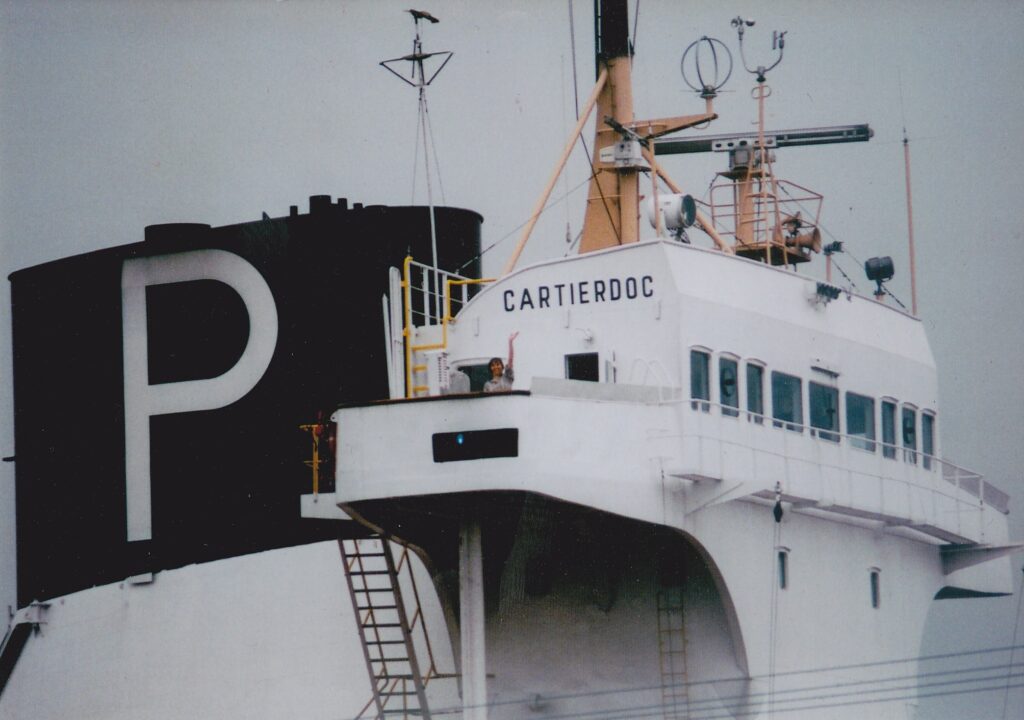
During the first two weeks of orientation, about 50 students were given discharge books, a first aid course and some basic instructions, and sent out to board the ships they were assigned for their first six-month sea term. By the end of second year, they were down to 12 students, who all became a close, tight-knit group. Lillian says, “Even now, 50 years later, these are the people who, if I picked up the phone and said I needed a kidney, would reply, “Which hospital? I’m on my way.” We were like family.”
Georgian experiences left a lasting impact
“I really liked the way the program was set up when I attended,” Lillian recalls. “We spent six months at sea, and then six months in class in Owen Sound, for three continuous years. During the six months in school, we learned the trade – there were some subjects that still baffle me, like electricity and magnetism. In the following six months, we had the opportunity to put all that knowledge into practice.
I was lucky, and, for the most part, had wonderful teachers on the ships to which I was assigned. I’m sure that, over time, I asked a lot of seemingly dumb questions, but, luckily, those captains and officers were blessed with lots and lots of patience. I was thrilled when I got to a position where I was one of those officers and captains who was assigned a cadet from Georgian College on my own ship and was so pleased to see them rising through the ranks.”
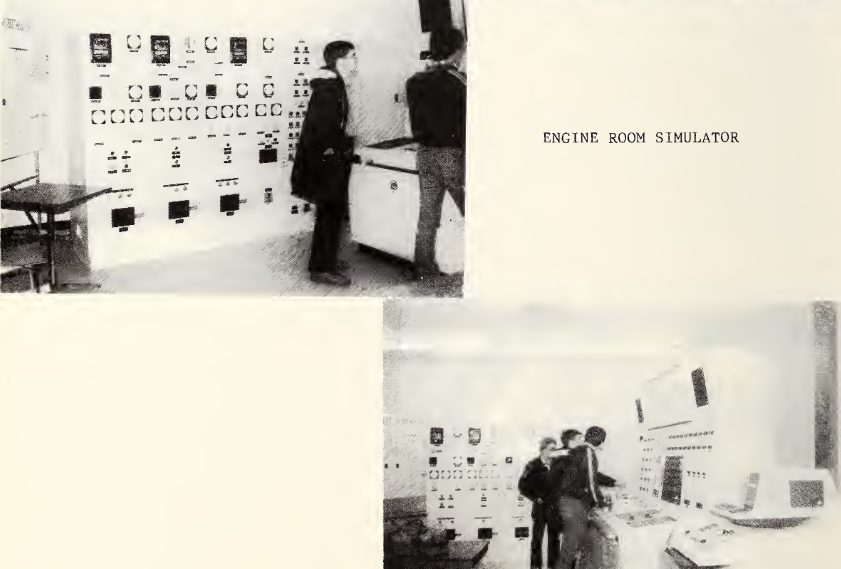
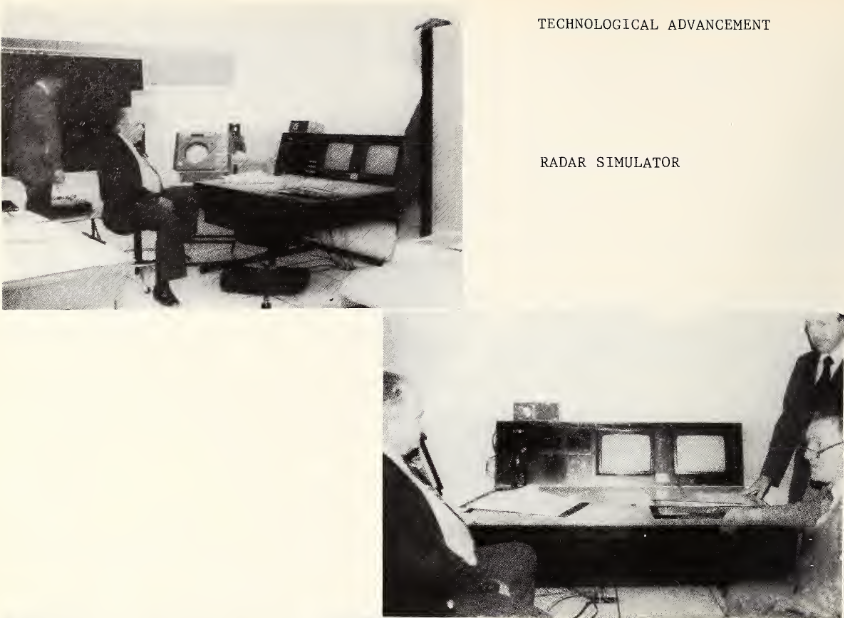
Lillian says she remembers all her classmates and professors, even the captains and officers she sailed with. “Gord Gunn taught physics, Ida Kerr taught math, and Captain John Archer turned us all into proper seafarers. In all my years of schooling, these people made a lasting impression on me. I’m not sure they make them like that anymore.”
Launching a career at sea
Throughout her career, Lillian worked on the St. Lawrence Seaway system, the Atlantic coast and the Arctic. In 1995, she moved to the Great Lakes Pilotage Authority, becoming the first female marine pilot in Canada. She’s also the first woman to captain on the Great Lakes.
We started our careers at a time when deck officers were in short supply and high demand. We graduated on a Friday, and on Saturday morning, were all bound for our respective ships. It might be hard to believe now, but when I was a cadet, there were some companies and captains who refused to have me on board – something about either bad luck, or ‘girls’ being nothing but trouble.
“I was lucky, though, beginning my post-graduate career with N. M Paterson & Sons, Ltd., a family-owned company based in Thunder Bay – sadly, no longer with us. I had a captain who stated that, given the same opportunities as ‘the boys’ there was no reason for me not to succeed. I spent ten years as a cadet and deck officer with them; then another ten as captain.
I got my first command up in the Arctic when our captain had to be taken off and hospitalized, and there was no way to get another captain up there in a timely fashion. After twenty years with Paterson, I got the opportunity to write the exam for the Great Lakes Pilotage Authority, and although I hated to leave the company that had been so good to me, I looked forward to a new adventure.
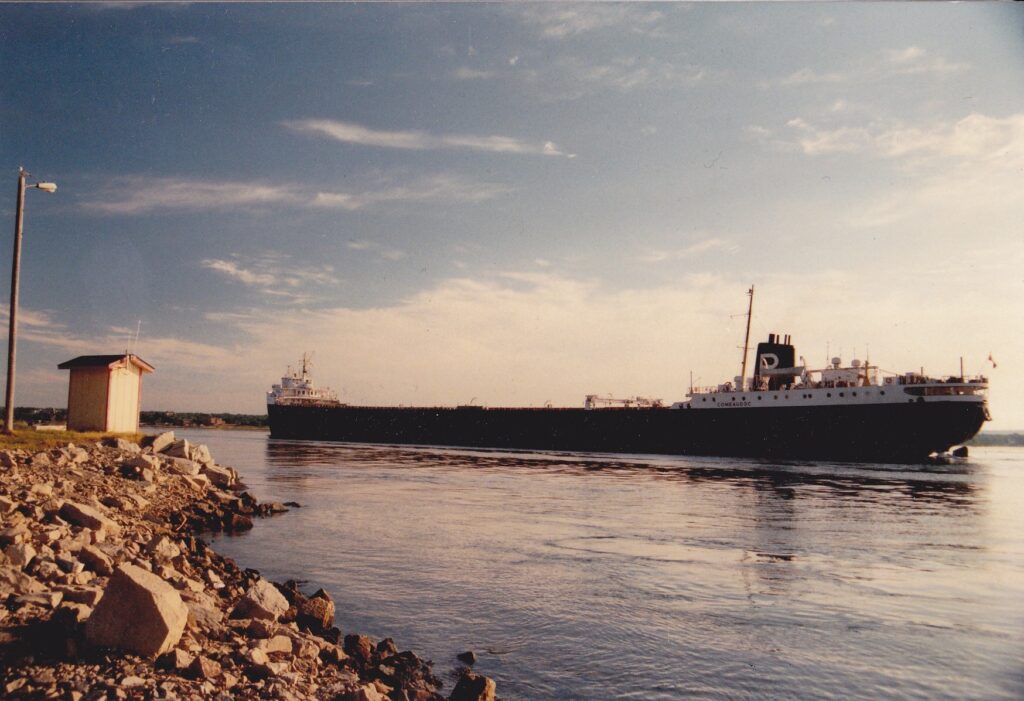
Somewhere along the way, I’d married and realized that I spent more time with my shipmates than I did with my husband, so, twenty-five years after I stepped onto my first ship, I stepped off from my last.
Not quite ready to call it a day, I enrolled at the University of Western Ontario, obtained a degree in media studies and English, went on to do a Master’s in English, and finished up with a degree in education. After that, I taught at the local Catholic school board for ten years. Now, I was ready to retire.”
50 years of change, but there’s ‘nothing that women can’t do if they choose’
“I’m sure I’m not alone when I talk about the good old days, but, when I was captain on my ship on the Great Lakes, there were no cellphones,” Lillian says. “When you left the dock, you were on your own. We still used sextants; we depended on our crew mates to make sure all ran smoothly. When you spoke to the office and they asked how things were going, the expected response was “fine.”
In the early days, you fit your ship out in the spring and returned home at lay-up in December. Now, the leave system allows mariners to have a better work/home balance. The technology on board vessels now has advanced tremendously. I’m sure I would be lost should I have to board a vessel again.
I’ve attended a few functions over the years at the college and appreciate the invitations. I’m so pleased to see so many young, eager, ambitious women in the marine program, both on the navigation and engineering side.”
I’m sure the advice we were given in the mid-1970’s still holds true today. Listen more than you talk. Everyone can teach you something. Go for it. I remember when I entered university and heard ‘community college’ mentioned with contempt, as a second-best option if one wasn’t accepted at university. I couldn’t let that go unchallenged.
Three of the best years of my life were spent at Georgian College. Everything I know about work and how to succeed, I learned there. Skilled trades have entered their renaissance. Co-op programs give students the opportunity to put their theory into practice along the way. And, there’s nothing that women can’t do if they so choose.
Looking forward to the next 50 years
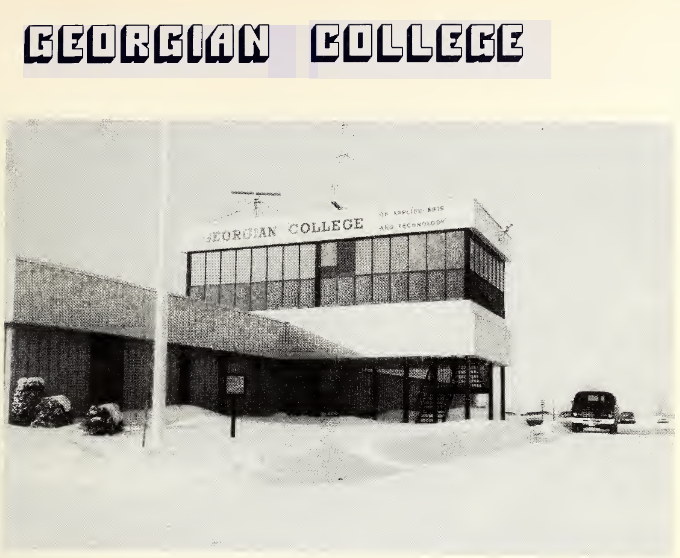
Georgian recently reached a historic milestone of more than 50 years of marine programming at the college. In 1967, the first location of the Owen Sound Campus was established at the corner of 3rd Ave. and 10th St. West, which is now a chiropractor’s office. The first marine program started in 1973, and Georgian welcomed the first graduating class of marine navigation in 1976, which included five cadets. Today, Georgian is a leader in marine innovation, training, research and development. The Centre for Marine Training and Research (CMTR) is recognized as Central Canada’s marine centre of excellence.
For Lillian, next June will be the 50th anniversary of her graduating class.
“We’re currently discussing how to mark the occasion and realize that we can no longer party like it’s 1977,” she says.
“So much has changed both in the marine industry and at the Marine Institute at the college. Georgian has a way of evolving to meet the needs of the industry. I have very young relatives, and, if I’m lucky, some of them may enter the marine industry. If so, I hope they get their start at Georgian.”