Sustainability
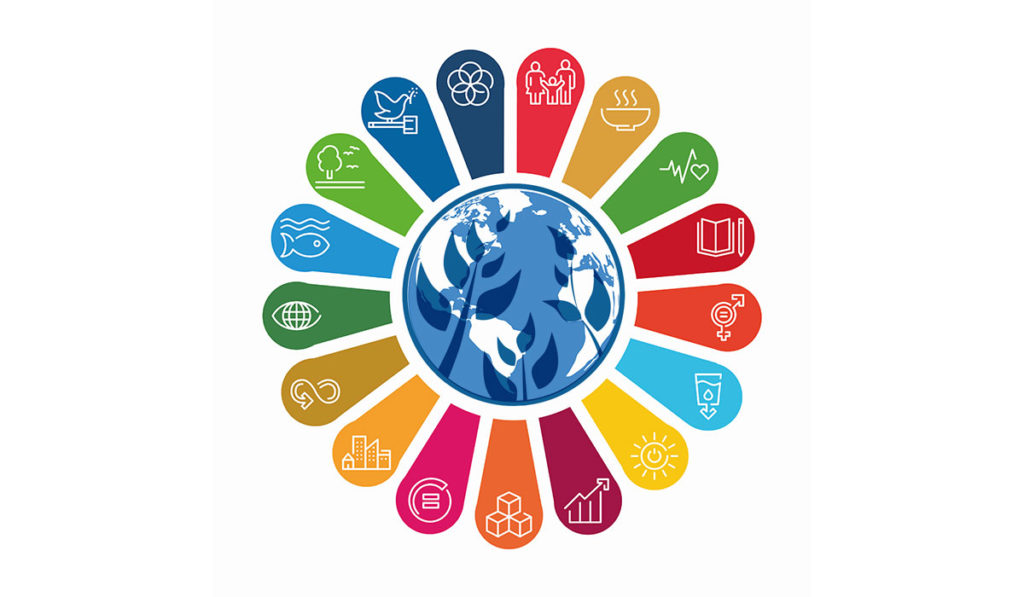
At Georgian College, sustainability means taking thoughtful, long-term action to support the well-being of our people, our communities, and the planet. Guided by our commitment to the United Nations Sustainable Development Goals (SDGs), we see sustainability as a shared responsibility woven throughout our operations, academics and culture. As a college, we’re committed to reducing our environmental impact, fostering social equity, and contributing to a more resilient and inclusive future. These values are embedded in our Strategic Plan and reflected in the way we learn, work, and engage with our communities.
United Nations – SDGs
Georgian College and the Georgian College Students’ Association (GCSA) are proud signatories to the United Nations Sustainable Development Goals (SDGs) Accord and a designated Ashoka U Changemaker Campus. These commitments reflect our belief that changemaking should be part of everything we do and recognize the essential role colleges play in addressing global challenges such as climate change, poverty and inequality. By embedding the SDGs into our operations, academics, and student life, we create opportunities for real-world learning, community impact and institutional accountability.
Waste diversion and reduction
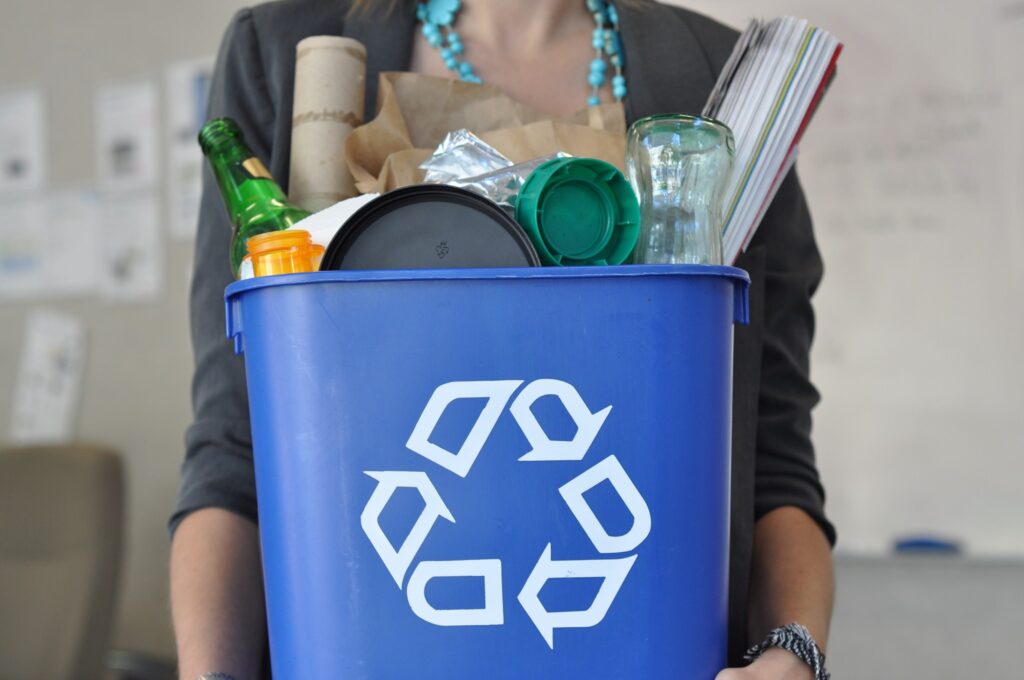
We ‘re committed to managing materials responsibly and minimizing what ends up in landfill. Our approach focuses on reducing waste at the source, improving diversion through sorting and reuse, and complying with provincial regulations.
Construction waste diversion
Our construction waste diversion program has achieved an 85% diversion rate, keeping over 550 tonnes of material out of landfill since 2023. This is done by working closely with contractors and haulers to separate wood, metal, concrete and other materials for proper recycling or reuse.
Pre-consumer organics diversion
Georgian diverts food scraps from prep areas in both our culinary programs and Chartwells-operated cafeterias. These pre-consumer organics are collected separately and sent to composting facilities, reducing methane emissions and supporting circular food systems.
Waste audits and compliance
We conduct annual waste audits in accordance with Ontario Regulation 102/94, which requires a 24-hour sampling of garbage, recycling and organics from key buildings. These audits inform our Waste Reduction Work Plans and help target areas for improved sorting and education.
Buildings
Our buildings: designed with sustainability in mind
We’re committed to improving the sustainability and performance of our campus buildings. From new construction to ongoing renovations, we’re focused on reducing environmental impact and supporting healthy, energy-efficient learning spaces. These projects reflect our broader commitment to building performance, climate action, and the health and wellbeing of our students and employees.
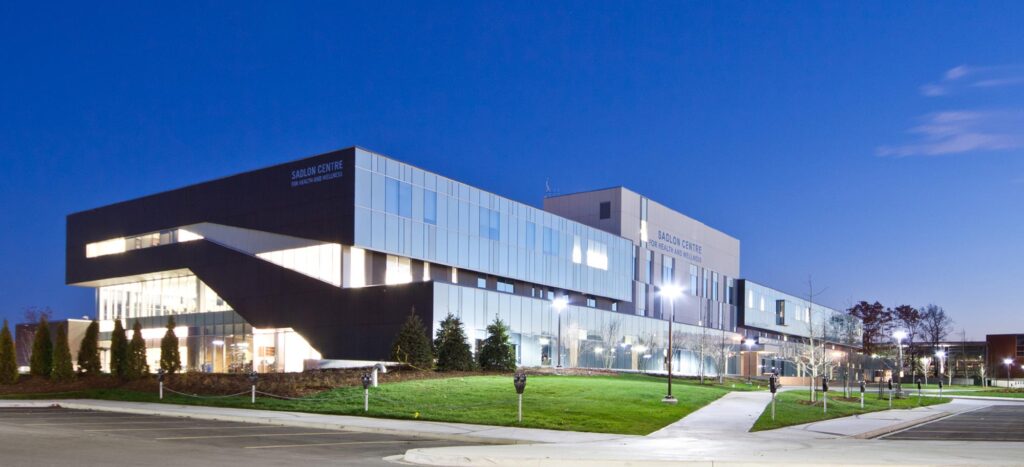
Sadlon Centre for Health and Wellness (M building – Barrie)
This building is certified as LEED Silver, recognizing its sustainable design, energy efficiency, and focus on indoor environmental quality.
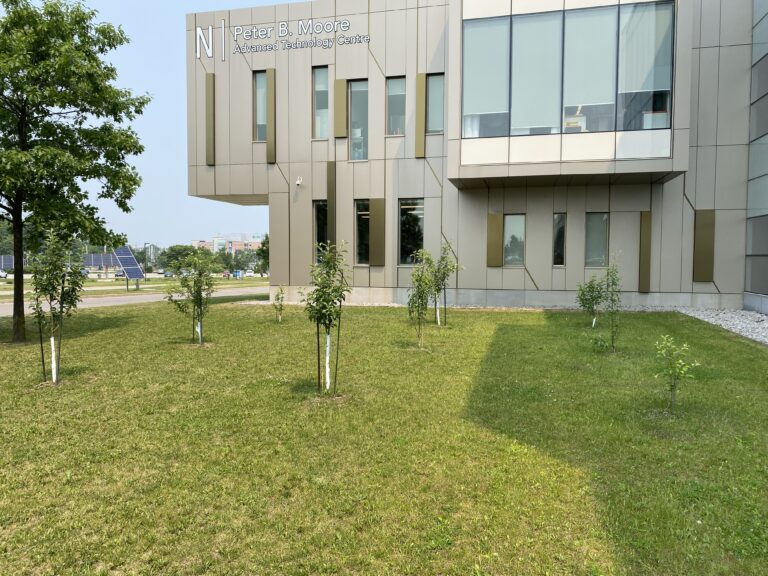
Peter B. Moore Advanced Technology Centre (N building – Barrie)
While not formally certified, this facility was constructed to LEED-equivalent standards, incorporating sustainable building practices such as efficient lighting, ventilation systems, and water-saving features.
Founders Building (B Building – Barrie)
Currently undergoing building envelope upgrades to improve insulation and increase the R-value of walls and roofs, setting a new standard for how we approach renovations across our campuses.
Centre for Skilled Trades Retrofit Project (F building – Barrie)
This building will include new decarbonization measures aimed at reducing greenhouse gas emissions and supporting our Net Zero goals. Planned upgrades include high-efficiency HVAC systems, electrification of heating and integration with campus energy monitoring systems.
Grounds
Our grounds are more than just green space. They’re spaces for learning, biodiversity, and hands-on sustainability projects. We manage our campus landscapes with a focus on pollinator protection, climate resilience, and student engagement.
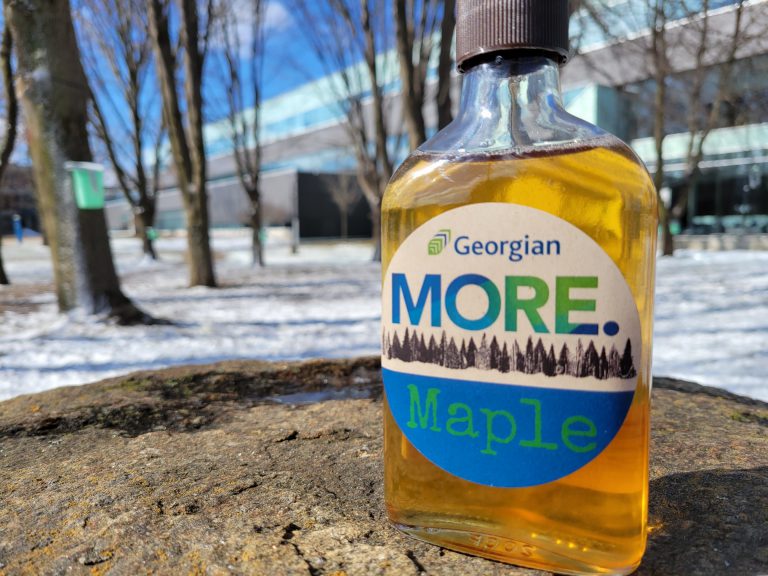
- Maple syrup production. In 2021, we launched a campus maple syrup project by tapping trees near the Sadlon Centre at the Barrie Campus. Students and employees collected sap and processed it in our culinary labs, producing small batches of syrup that highlight our connection to land and local food traditions.
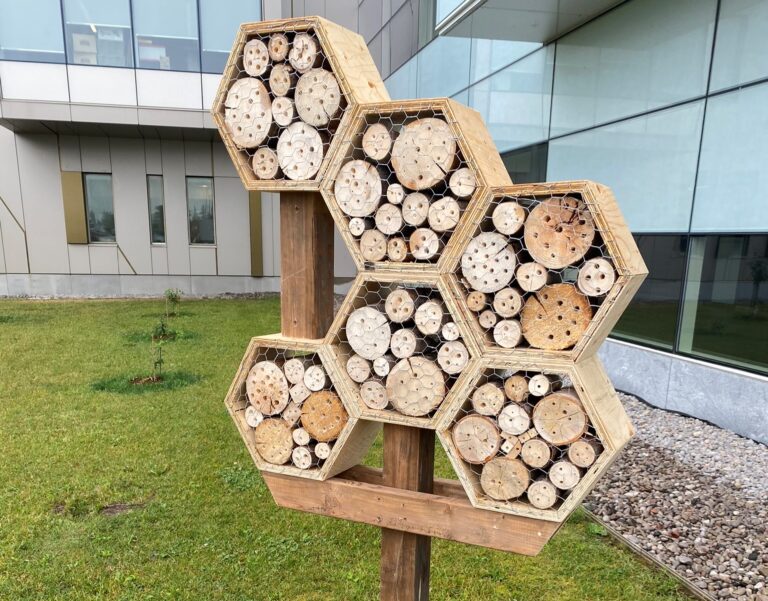
- Pollinator gardens. Several campuses have pollinator gardens planted with native species that attract bees, butterflies, and other beneficial insects. These gardens support biodiversity and are used for education and wellness, including plant ID walks and bee awareness campaigns.
- Bees on H building. A rooftop honeybee program at the Barrie Campus houses two honeybee hives and native bee domiciles. This partnership with Derkwood Beekeeping Supplies supports pollinator health, student research, and biodiversity, and has helped Georgian earn recognition as a Bee Campus by Bee City Canada.
Food and dining
Georgian College supports a food system that is student-focused, environmentally responsible and connected to learning. From culinary labs to food security programs, we work to reduce waste, promote sustainable eating habits, and grow food right on campus.
Bun-on-the-Run
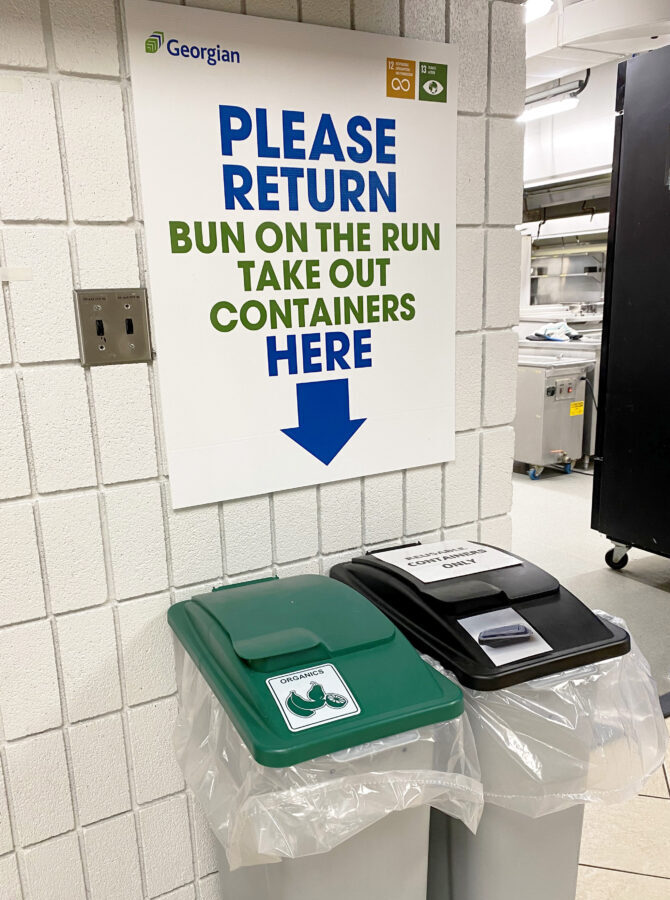
Our student-run café, Bun-on-the-Run, serves as a living lab for hospitality and culinary students, who prepare and serve meals with sustainability in mind. The café operates a take-back container program, encouraging customers to use reusable containers to reduce single-use waste.
GCSA Food Locker
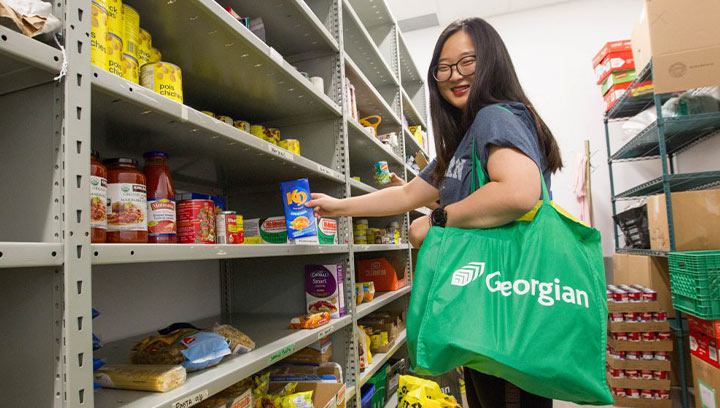
To support student well-being and reduce food insecurity, the Georgian College Students’ Association (GCSA) operates the Food Locker. This is a confidential, free food support service available at multiple campuses. Donations from employees, students, and community partners help stock the shelves with nutritious, accessible options.
Campus food growing
Georgian grows food at several campuses, including a 3,600 ft² garden at the Barrie Campus that produces seasonal vegetables, herbs and pollinator-friendly plants. We also have a small orchard with fruit-bearing trees like apples and pears, supporting campus food programs and culinary use.
Sustainable transportation
Transportation
Georgian supports sustainable, accessible, and low-emission travel options for students, employees, faculty, and visitors. With centrally located campuses and a mix of urban and natural settings, getting to and around campus is easier and more sustainable than ever.
EV charging
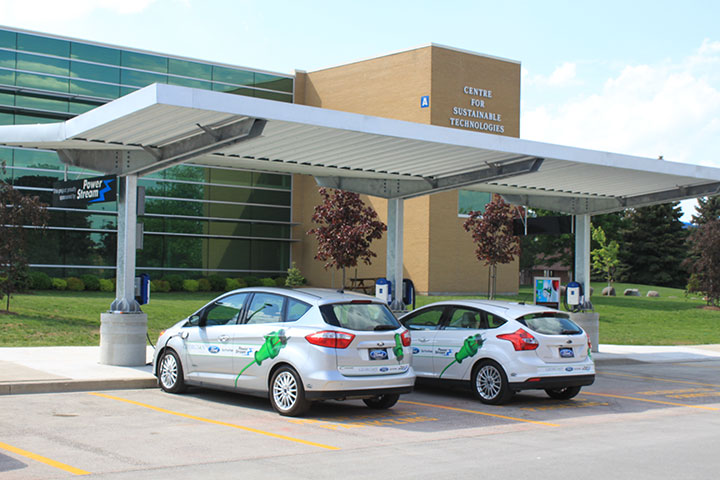
Electric vehicle (EV) charging stations are available at both the Barrie and Owen Sound campuses. These chargers are connected to the FLO network, so users will need the FLO app and an account to start charging. A nominal charging fee applies, along with a standard parking fee. To ensure access for others, vehicles must be actively charging while parked in these spaces and moved once charging is complete.
Public transit
All campuses are located near local transit routes. Many students and employees use public transportation as a reliable, cost-effective alternative to driving.
Learn more about regional transit connections and trip planning at Georgian Transit Info.
Bike racks and trails
All Georgian campuses are equipped with bike racks, and the Barrie Campus also offers bicycle lockers. Trails and bike paths connect several campuses to surrounding neighbourhoods and greenspaces, giving riders a safe and scenic way to commute. Choosing to walk or bike is a great way to reduce your carbon footprint and enjoy our natural environment.
Energy management
Our campuses feature a range of energy-efficient systems and infrastructure designed to reduce energy use and improve resilience. These include ground source heat pumps, high-performance building envelopes, advanced lighting and building controls, and on-site microgrids that reduce reliance on the provincial grid.
Georgian is committed to reducing greenhouse gas emissions and improving energy performance as we work toward our goal of Net Zero by 2050. Our approach is guided by a series of five-year milestones that outline the projects and operational changes needed to make steady progress toward this target.
To support this work, Georgian College maintains an Energy Conservation and Demand Management (CDM) Plan. These plans, required under Ontario Regulation 25/23 as part of the Broader Public Sector (BPS) Energy Reporting and Conservation and Demand Management Plans requirements, establish the five-year incremental actions that move the College toward its Net Zero goal. The regulation also requires Georgian College to report annual utility consumption. The 2025-2030 Energy Conservation and Demand Management Plan focuses on optimizing existing systems, reducing energy waste and managing peak demand.
Watch this video about Georgian’s academic microgrid.
Sustainable procurement
Purchasing Services follows a value-based procurement approach that prioritizes environmental, social, economic, and cultural benefits, supporting our commitment to SDG 12: Responsible Consumption and Production, along with other relevant SDGs.
Legislative compliance
As a broader public sector institution, Georgian College complies with all relevant procurement legislation and guidelines. This includes the Fighting Against Forced Labour and Child Labour in Supply Chains Act, which requires us to assess and address risks related to forced and child labour in our global supply chains. We also follow the Procurement Restriction Policy, keeping the procurement of goods and services local to Ontario and Canada wherever feasible.
Diverse suppliers and sustainability preferences
We use a sustainable procurement toolkit to integrate environmental and social considerations into competitive bidding, such as local, women-owned, Indigenous-owned, and LGBTQ2S+-owned vendors, and evaluating products based on durability, take-back programs, life-cycle cost, and certifications like EPEAT and FSC.

Sustainability in academics
Are you looking to make a difference through your career?
At Georgian, many programs include learning outcomes that focus on sustainability, preparing students to address real-world environmental, social, and economic challenges. Some programs go even further, embedding multiple sustainability-focused outcomes that align with the UN Sustainable Development Goals and support students in becoming changemakers in their fields.
Check out these programs to see how sustainability shows up in both expected and unexpected places.
- General Arts and Science – Foundations
- General Arts and Science – Shki Miikan (New Road)
- Honours Bachelor of Interior Design
- Indigenous Community and Social Development
- Justice, Equity, Inclusion, and Belonging
- Kitchen and Bath Design
- Maajii-Anishnaabemdaa (Start Speaking the Language)
- Marine Technology – Navigation
- Tourism
Sustainability in action
See how our students and staff are putting sustainability into action on campus, in the community, and through hands-on projects, contributing to our UN SDG commitments.
Next generation of farmers
Georgian’s new business agriculture program is helping prepare future farmers with the skills to grow sustainably.
Read the story.
Sustainability speaking podcast
This podcast shares inspiring stories of people and organizations advancing the UN SDGs and invites listeners to be part of the change.
Listen here.
Hairstyling students in Guatemala
Hairstyling students taught haircutting skills to people in impoverished communities, helping them build income-generating opportunities.
Read the story.
Electric VW Westfalia project
Students retrofitted a 1972 Volkswagen Westfalia camper van as an electric vehicle and unveiled it at the Georgian College Auto Show.
Read the story.
SpacesShared housing initiative
Georgian partnered with SpacesShared to connect students in need of affordable housing with older adults who have space in their homes.
Read the story.
Academic microgrid
Solar panels at the Barrie Campus power EV chargers and the Alectra Centre for Research, Innovation and Commercialization through an on-site microgrid.
Read the story.
Women in trades event
Georgian and Skills Ontario hosted an event to inspire young women to consider careers in skilled trades and technologies.
Read the story.
Free menstrual products
Free menstrual product dispensers are available at all campuses, removing barriers to student participation and well-being.
Read the story.
Questions?
Want to learn more about sustainability at Georgian College?